
If you bought $1,000 worth of Nike when it went public, there was a point in time your Nike stock was worth just short of $1 million. Just five short years later, that number would tumble down to $188,000. So what happened to the iconic checkmark since 2021?
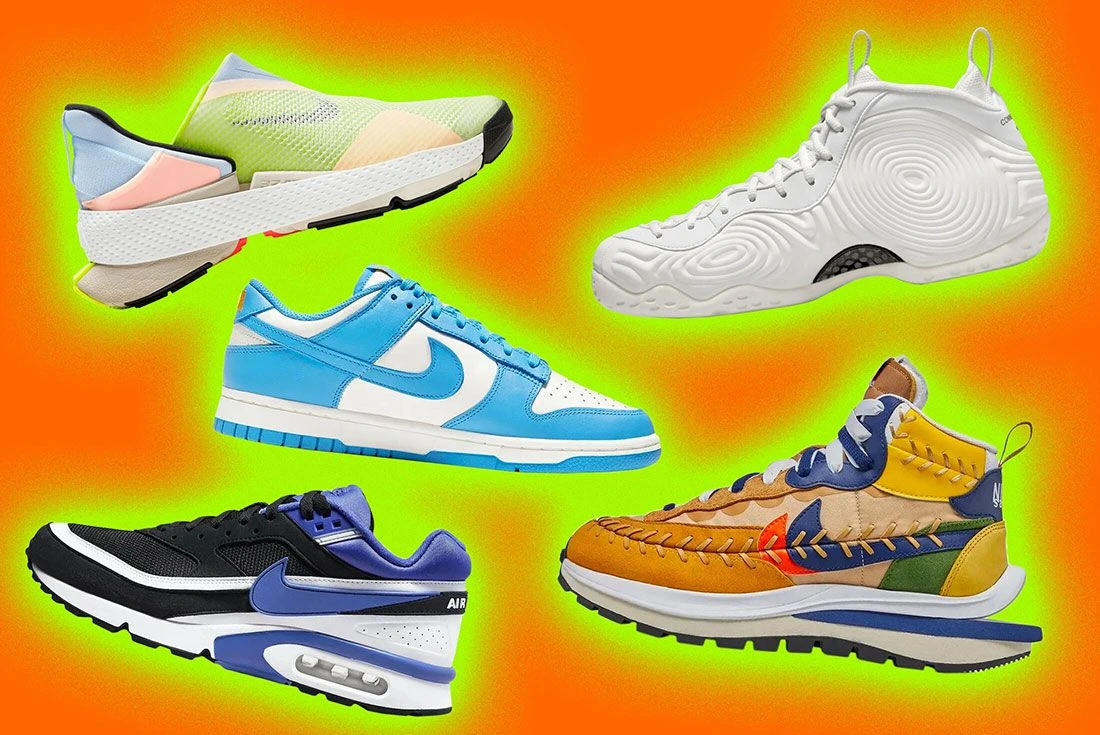
Familiarity > Innovation
If it ain't broke, don't fix it. Or so Nike thought. Management acknowledged excessive reliance on retro products and a lack of differentiation across its lifestyle brands,[2] yet failed to realize prioritizing familiarity over innovation did not guarantee continuing demand. The turning point happened on June 28, 2024, when Nike fell 2 0% in one session after forecasting falling annual sales when analysts had expected growth. [3] Comparing FY25 to FY24, Nike saw revenue down 10%, net income down 44%, gross margin down 2%, and diluted EPS down 42%. In other words, the profitability backing every individual share has nearly been cut in half in one year. This drop in EPS also increases the risk that dividends could be frozen or cut.

The Direct-to-Consumer Bet
Nike’s push toward direct-to-consumer sales had an understandable appeal. Selling through its own stores and apps offered more control over pricing, customer relationships, and the shopping experience. It also created the opportunity to retain more of the revenue that otherwise went to retailers.
But Nike reduced ties with wholesale partners while struggling to deliver enough compelling new products. Reuters identified both weak innovation and the underperformance of its direct-sales strategy as concerns in early 2024.[4]
The distinction matters. Owning the checkout does not guarantee that consumers will want what is being sold. Retailers also provide discovery, convenience, and opportunities to compare products. Weakening those relationships carries a cost.
Familiar Shoes, Fresh Competition
At the same time, Nike became too reliant on the continued popularity of retro sneakers. Familiarity can be a powerful asset, but it becomes a vulnerability when shoppers want something new. Management’s latest commentary acknowledges excessive dependence on retro products and insufficient differentiation in its lifestyle assortment.[2]
Competitors show that demand for athletic footwear has not disappeared. In the quarter ended June 30, 2026, On reported revenue growth of 13.5%, or 21.6% excluding currency movements. Hoka’s sales increased 7.7% over the same period. These are smaller businesses with different geographic and product mixes, but their growth makes it difficult to explain Nike’s struggles solely through weak consumer spending. [5][6]
On also reported 26% growth in direct-to-consumer sales. That is an important counterpoint: direct selling itself is not inherently flawed. Nike’s experience suggests that channel strategy cannot compensate for weakening product demand. [5]
When Discounts Hurt the Bottom Line
The financial consequences became clear in fiscal 2025, which ended that May. Revenue fell approximately 10%, from $51.4 billion to $46.3 billion. Net income fell much faster—about 44%, from $5.7 billion to $3.2 billion. Nike’s annual report attributed pressure on gross margins partly to higher discounts and inventory-related charges.[7]
This is where a brand problem becomes an earnings problem. Discounts generate sales, but leave less profit from each transaction. They can also encourage customers to wait for the next promotion, making a return to full-price selling harder.
Losing Ground in China
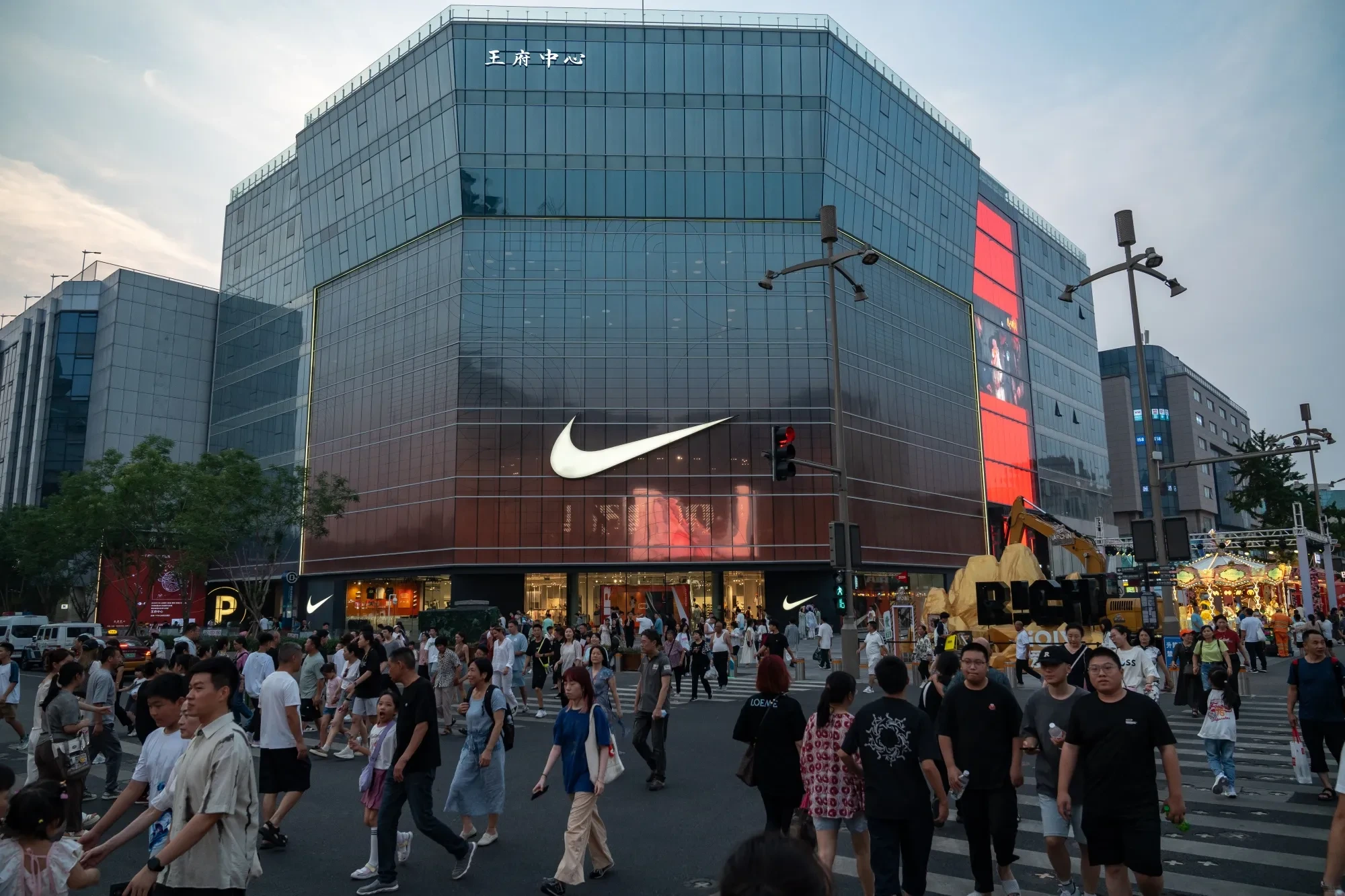
China has added another challenge. The Financial Times reported increased pressure from international rivals and local brands, including Anta and Xtep, alongside problems with Nike’s pricing and localization. That suggests a recovery requires more than waiting for the economy to improve.[8]
Nike’s latest results show how much work remains. For the quarter ended August 31, 2026, revenue fell 4% to $11.2 billion. Greater China sales fell 26% excluding currency movements, although North America grew 2%. Nike forecast another high-single-digit revenue decline for fiscal 2027.[9]
Can Nike Find Its Footing?
There are reasons to avoid writing Nike off. Its North American growth and improving quarterly gross margin offer some evidence of progress. The company’s new Pace program targets $2.5 billion in cumulative savings through fiscal 2031, before restructuring charges and reinvestment. Those are cumulative savings, however—not an annual profit increase.[9]
For investors, the price decline alone does not settle the question of value. At the October 9 closing price of $34.71 and the midpoint of management’s $1.15–$1.35 adjusted earnings-per-share guidance, Nike trades at roughly 28 times fiscal 2027 adjusted earnings. That calculation is sensitive to whether current earnings represent a temporary low or a weaker long-term reality.[9][10]
The bullish case depends on Nike restoring demand, reducing discounts, and rebuilding profitability. The bearish case is that competitors have permanently captured part of the appeal Nike once enjoyed.
I would judge the turnaround by evidence of stronger full-price sales, a healthier product mix, and sustained earnings improvement. Cost cuts can help fund that recovery. Its success will ultimately depend on giving customers more reasons to choose Nike again.
- Sneaker Freaker. The Top Nike Releases of 2021 · 2021-12-01 · Accessed 2026-10-03
- MarketWatch. Nike’s stock heads for its worst year ever as the company’s troubles mount · 2026-10-02 · Accessed 2026-10-03
- Barrons. Nike Is Burning Cash to Pay a 5% Dividend. How Long Can It Last? · 2026-10-02 · Accessed 2026-10-03
- Reuters. Nike set for rare sales drop with focus on US demand, direct-to-consumer pivot · 2024-03-20 · Accessed 2026-10-09
- On. On Reports Results for the Second Quarter and Six-Month Period Ended June 30, 2026 · 2026-08-11 · Accessed 2026-10-09
- SEC. DECKERS BRANDS REPORTS FIRST QUARTER FISCAL YEAR 2027 FINANCIAL RESULTS · 2026-07-23 · Accessed 2026-10-09
- SEC. Nike: Fiscal 2025 annual report · 2025-07-09 · Accessed 2026-10-09
- Financial Times. How Nike fell off the pace in China · 2026-09-29 · Accessed 2026-10-09
- Nike. NIKE, Inc. Reports Fiscal 2027 First Quarter Results · 2026-10-01 · Accessed 2026-10-09
- MarketWatch. Peloton Interactive Inc. stock outperforms competitors on strong trading day · 2026-10-09 · Accessed 2026-10-09