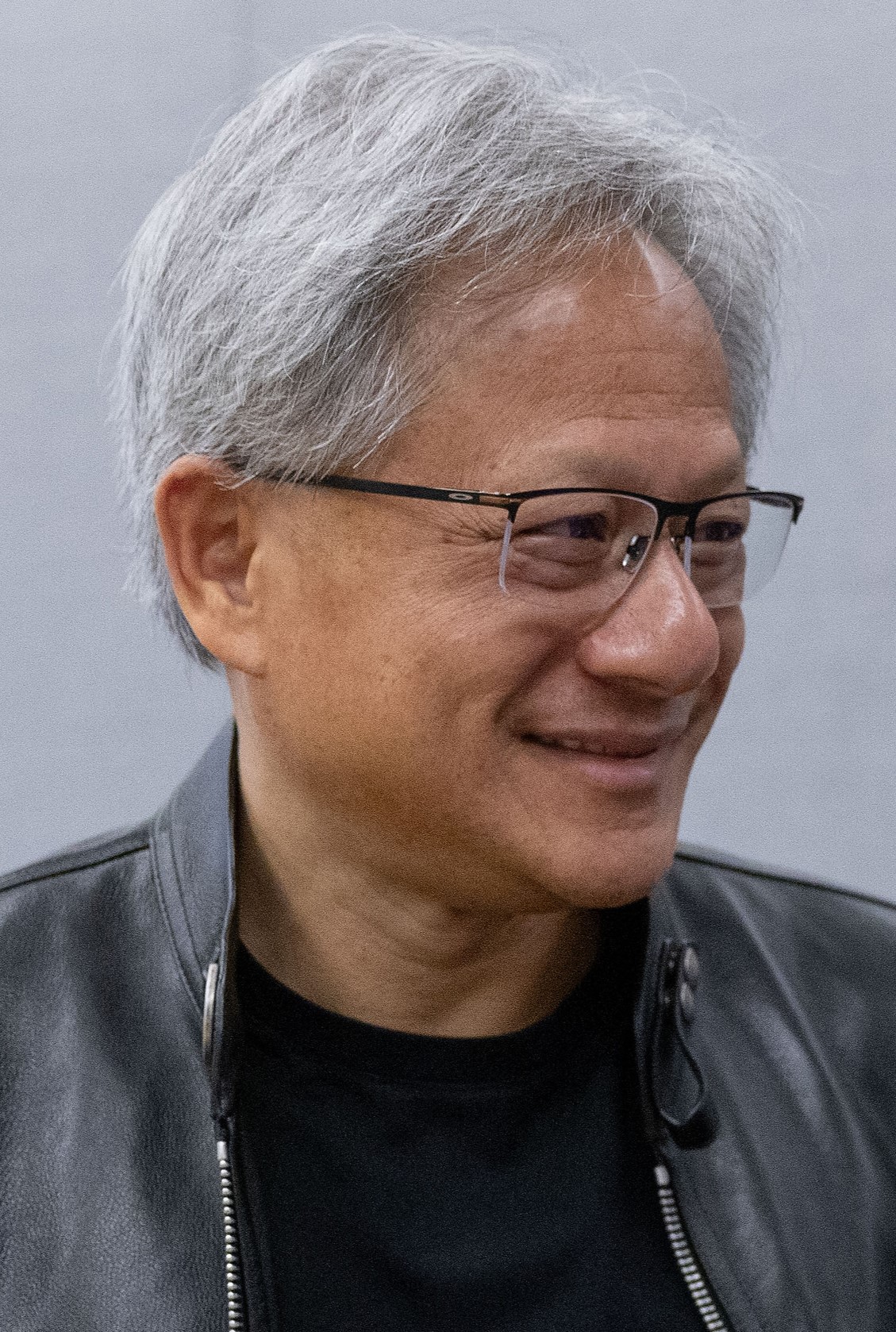
On November 12, Nvidia said it would search inside and outside the company for a new CEO. Eleven days later, it announced a unanimous choice for the job. The board had voted Sunday to reinstate the man who had just left it. Co-founder Jensen Huang returns as president, CEO and director. Colette Kress, who ran the company in the interim, continues as CFO. Harvey Jones remains board chair.[1][2][3]
The market had already seen the earnings. It had already heard that Nvidia’s newest AI system had shipped. Both announcements came six days earlier, with Kress in charge. Yet Reuters reported that Nvidia shares jumped more than 25% in premarket trading Monday after news of Huang’s return. What changed over the weekend was who would make the next set of decisions. Investors evidently thought that was worth a great deal.[4][5]
The quarter Kress reported
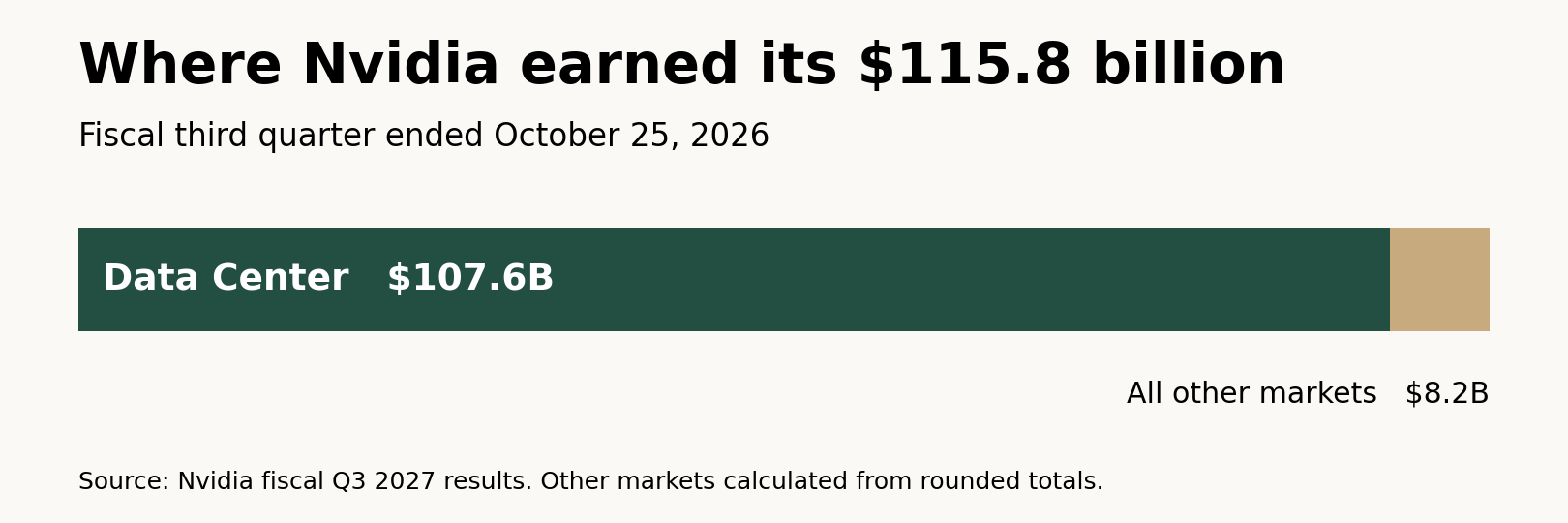
Nvidia recorded $115.8 billion in revenue in its fiscal third quarter. Its data center business accounted for $107.6 billion, about 93 cents of every dollar the company brought in. The quarter ended October 25, before the leadership crisis began. Those figures tell us what Huang came back to. They tell us very little about how Nvidia would have performed under Kress.[4]
Consider the decision facing a company building an AI data center. It has to commit money today to a system it expects to run for years. A delivery delay can leave an expensive building waiting for equipment. A CEO who can get a supplier, a customer and his own engineers to agree on a date they can all meet is worth something real. That’s the strongest business case for bringing Huang back. It also explains why shareholders should want to know who else at Nvidia can do the same job.
Washington had a say
Huang’s departure followed reporting about personal relationships, including one that raised questions about whether a foreign intelligence service had targeted him. Nvidia says its independent directors consulted senior U.S. government officials before concluding that his return posed no national security risk. Their investigation into the reported targeting continues with independent counsel. President Donald Trump separately told CNBC that he had intervened in favor of Huang’s return, according to Reuters.[3][5][6]
U.S. officials may have information about a foreign intelligence threat that directors could never obtain themselves. Asking for that assessment makes sense. Deciding whether an executive has earned the trust of employees and shareholders is a judgment the board still owes those people. The distinction will matter most if the investigation produces findings that are uncomfortable for a CEO the president publicly wanted back.[3][6]
Washington also has a more direct way to shape Nvidia’s business. In the outlook it issued last week, Nvidia assumed zero revenue from sales of data center compute products to China. A change in the CEO’s office does nothing by itself to change that assumption. For anyone trying to understand American leverage over the AI industry, that line in the earnings release deserves as much attention as the president’s remarks.[4][6]
Monday’s rally gives the board a reason to believe it made a popular decision. The harder test comes later. Nvidia says it is hiring a chief compliance officer who will report to a board committee. Investors should watch what the directors disclose when their investigation ends, and whether the new officer has the authority to challenge the founder they just brought back. Huang’s return answered who runs Nvidia. What shareholders still need to see is who can tell him no.[3][5]
- Nvidia announces CEO transition, November 12, 2026 (SEC exhibit)
- Nvidia Form 8-K, filed November 23, 2026 (effective date and roles)
- Nvidia board announces reinstatement, November 23, 2026 (vote, investigation and oversight)
- Nvidia fiscal third-quarter 2027 results, November 17, 2026 (revenue, shipments and outlook)
- Reuters, November 23, 2026, via Investing.com (premarket reaction and departure context)
- Reuters, November 23, 2026 (presidential remarks and board deliberations)
- Cropped photograph via Wikimedia Commons
- CC BY 4.0